What Happens When Someone Dies Intestate?

VOLUME 24 NUMBER 17 Even with regular prompting, about half of people never get around to completing even basic estate planning. If they never do get a will signed, we lawyers say that they have died “intestate”. But what does that really mean for their loved ones? Note that the information we provide here is […]
Should You Share Your Estate Plan With Your Family?
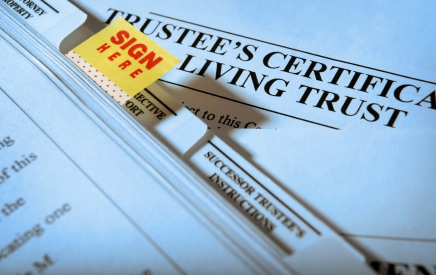
VOLUME 24 NUMBER 12 You’ve done the thoughtful estate planning work we urged you to do. You signed your will, your powers of attorney — maybe you even created a living trust. Now what? Do you share your estate plan with your family? There is neither a requirement nor a prohibition — the decision about […]
Handling Your Own Legal Work — Without a Lawyer
OCTOBER 12, 2015 VOLUME 22 NUMBER 37 Last week we wrote about when you might reasonably represent yourself — that is, when you might not need a lawyer for your legal work. We suggested that what lawyers do is not precisely brain surgery, and that reasonably intelligent, informed and diligent non-lawyers might well be able […]
When You Need to Talk With a Lawyer
OCTOBER 5, 2015 VOLUME 22 NUMBER 36 So often we field questions (on this website and in our practice) about whether people need to consult a lawyer. Unsurprisingly, perhaps, there is a terrific resistance to seeking legal advice. We lawyers don’t always help — our fees can be substantial, and unpredictable. We speak a language […]
The “Spendthrift” Trust Explained

JULY 27, 2015 VOLUME 22 NUMBER 27 Lawyers love to name and categorize everything they deal with. It’s a useful way to group similar concepts, but it can lead to confusion and misunderstanding. That’s particularly true when a legal concept is non-exclusive — in other words, when one instrument can go by a number of […]
Top Ten Reasons to Skip the Living Trust and Sign a Will Instead
FEBRUARY 2, 2015 VOLUME 22 NUMBER 5 Last week we suggested some of the reasons why you might think about having a revocable living trust as part of your estate planning documents. This week we’ll try to turn it around, and give you ten reasons why you might prefer to have a will (“just” a […]
Managing Your Digital Assets With an Eye on Mortality

SEPTEMBER 22, 2014 VOLUME 21 NUMBER 34 For a while it was just an interesting academic problem: what would happen to your Facebook page, your Instagram photos, and your Pinterest collection if you died? And what about your e-mail account(s), your shopping login information and the passwords for all of those different online arrangements? It […]
Will Contests Must Be Based on Actual Evidence
APRIL 28, 2014 VOLUME 21 NUMBER 16 We have written before about the fact that, despite popular notions, will contests are actually quite rare. We have explained to our readers that mounting a will contest can be an expensive proposition, and that the likelihood of success is usually slight. Those observations remain true today, but […]
Here’s a Project For You: Write Your Own Obituary
APRIL 14, 2014 VOLUME 21 NUMBER 14 I have a new aspiration. I want my obituary to appear (at the appropriate time, of course — not before) in someone’s blog, newsletter, book or other publication as “one of the best obituaries ever” — maybe even to “go viral.” I’m just not sure I can count […]
The iWill — Might It Be the Future of Probate and Estate Planning?

FEBRUARY 24, 2014 VOLUME 21 NUMBER 8 News reached us this month of a November, 2013, probate court order in Australia admitting an unusual will to probate, and it made us wonder if we should anticipate a digital future for estate planning. An Australian probate decision would have to be pretty unusual to get noticed […]
Definitions For Common Estate Planning Terms
FEBRUARY 3, 2014 VOLUME 21 NUMBER 5 Judging from the questions we field online and from clients, there is a lot of confusion about some of the basic terms commonly used in estate planning. We thought maybe we could do a service (and make our own explanations a little easier) by collecting some of the […]
Can You Change Your Will By Writing On It?

NOVEMBER 18, 2013 VOLUME 20 NUMBER 44 So you have a will, and you want to make some changes. Can you just write in the new provisions? How about if you sign somewhere on the document?Can it be a copy of your will, or does it have to be on the original to be effective? […]